Can You Sell a House With Code Violations in Houston?
Open code violations do not always prevent a sale. Learn how Houston-area owners can check the case, compare repairs, and evaluate as-is options.
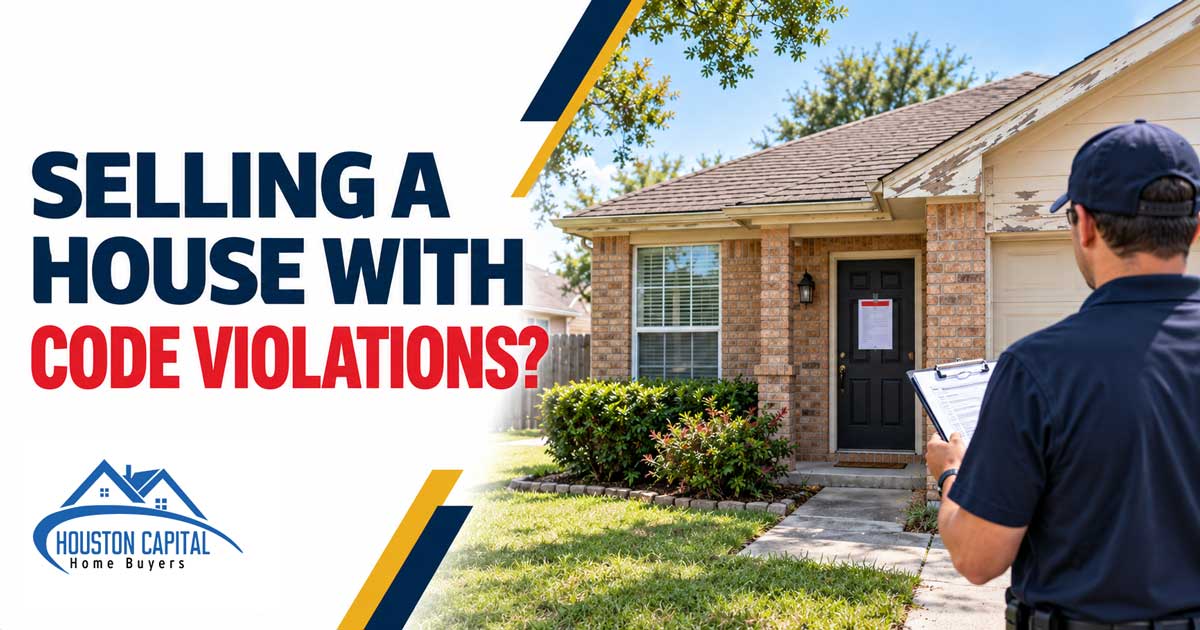
Yes. In many cases, you can sell a Houston-area house with open code violations. The violation does not automatically block a sale, but it can affect the buyer, the contract, the title review, the closing timeline, and the property’s value. The safest first move is to identify exactly what was cited, confirm the deadline and current status with the city or county, and find out whether any fine, cleanup charge, or lien has already been recorded.
From there, you can compare three basic paths: correct the problems and list the property, disclose the condition and sell it as-is through a Realtor, or sell directly to a buyer prepared to handle the repairs and compliance work. The right answer depends on the severity of the violation, your available cash, your timeline, and what each option leaves you with after costs.
What a Code Violation Means
A code violation is a notice that a property condition does not meet a local ordinance or building requirement. In Houston, Community Code Enforcement handles issues such as dangerous buildings, heavy trash, weeds, junk motor vehicles, open and vacant buildings, and other neighborhood safety concerns. Building or construction work may also involve the Houston Permitting Center.
The exact process depends on where the property is located. A Houston mailing address does not always mean the property sits inside Houston city limits. Homes in Harris, Fort Bend, Montgomery, Brazoria, and Galveston counties may be governed by a different city, an unincorporated county area, or another local authority. Start with the agency named on the notice instead of assuming Houston rules apply.
Can an Open Violation Stop the Closing?
An open violation may not prevent the owner from signing a sales contract, but closing is more complicated when money is owed or the city has recorded a lien. A title company searches the public record and identifies items that must be handled before it can issue the requested title coverage. The contract should also state who is responsible for repairs, fines, permits, and any required cure.
Texas law gives municipalities several enforcement tools. Depending on the facts and the applicable statute or ordinance, those tools may include civil penalties, repair or demolition orders, recovery of municipal expenses, and liens. The rules and protections are not identical for every property, especially homesteads, so do not assume a notice and a recorded lien are the same thing.
If a lien exists, the title company, municipality, and the parties may be able to arrange for it to be paid or otherwise resolved at or before closing. That is fact-specific. A real estate attorney or title professional should review the actual documents. This article is educational and is not legal advice.
First Steps After Receiving a Notice
1. Read every page and note the deadlines
Find the case number, cited condition, inspection date, correction deadline, hearing date, contact information, and appeal instructions. Missing a deadline can reduce your options. If you bought or inherited the property recently, do not assume the agency has your current address.
2. Confirm the current status
Contact the agency listed on the notice. Ask whether the case remains open, whether a reinspection is scheduled, whether penalties are accumulating, and what proof is required to close the case. Keep a log of names, dates, and instructions. Houston residents can also use 311 to make or check certain service requests.
3. Check title early
A notice posted on the door is not a complete title search. Before promising a buyer that the matter is easy to cure, ask a title company or real estate attorney to check for recorded liens, judgments, unpaid taxes, ownership problems, and other claims. This is especially important for inherited, vacant, burned, or long-neglected properties. For ownership complications that can layer on top of a code issue, see HCHB’s guide to inherited houses with unclear ownership in Houston.
4. Get repair and permit information
Obtain written estimates from qualified contractors. Ask whether permits or engineered plans are needed and whether past unpermitted work must be opened, removed, or corrected. A cheap cosmetic patch may not satisfy an inspector. For a dangerous-building case, the scope can be much larger than yard cleanup or replacing a broken window.
5. Compare realistic net results
Do not compare only the highest advertised price. Compare the likely sale price, repairs, cleanout, holding costs, taxes, utilities, insurance, commissions or fees, buyer concessions, and the risk that financing or inspections delay the deal. A lower as-is price may produce the better practical result in one case, while repairs and a traditional listing may clearly win in another.
Your Main Selling Options
Repair the property and list it
This can be the strongest option when the repairs are manageable, you have the money and time, and nearby retail sales support the investment. Fixing the violation may expand the buyer pool and help a financed buyer qualify. The drawbacks are upfront cash, contractor risk, permit delays, continued carrying costs, and the possibility that the project grows after work begins.
List the property as-is with a Realtor
An experienced local Realtor may market the property to investors or buyers who accept repairs. This gives the property broad exposure and may create competition. However, “as-is” does not remove disclosure duties, stop a buyer from inspecting, or guarantee a lender will accept the condition. The contract still needs clear language about the violation and any municipal lien.
Keep the property and correct the issue over time
Keeping the home may make sense when it produces income, has strong long-term value, or has personal importance. Before choosing this route, confirm that the correction schedule is realistic and that vacancy, insurance, taxes, security, and maintenance are affordable. An active enforcement deadline may limit how slowly you can proceed.
Sell directly to an as-is buyer
A direct sale may be useful when speed, privacy, certainty, no repeated showings, or avoiding repairs matters more than maximizing the top-line price. A capable buyer should inspect the property, understand the city process, use a reputable title company, and state in writing which costs and obligations each party will handle. The offer will normally reflect repair expense, risk, carrying costs, and resale value.
This route is not automatically best. If the violation is minor, the home is otherwise market-ready, and you have flexibility, correcting it or listing as-is may net more. Get more than one opinion and compare written terms, not just verbal promises. For a broader look at heavily distressed properties, see Is My House Too Ugly to Sell?
Two Hypothetical Houston Scenarios
Hypothetical scenario 1: Cleanup and exterior issues
An owner receives a notice involving tall grass, debris, and an unsecured opening at a vacant home. The owner confirms there is no recorded municipal lien, hires a crew, secures the property, photographs the work, and requests reinspection. Because the cure is limited, completing it before listing may be worth the cost.
Hypothetical scenario 2: Major structural concerns
An heir takes over a long-vacant house with fire damage, open permits, a dangerous-building case, and unclear title. Repair estimates are high and several relatives may have an ownership interest. In that situation, the family may first need title and probate guidance, then compare a rehabilitation plan with an as-is sale to an experienced buyer. The family should not spend heavily until ownership and the city’s requirements are clear.
How to Evaluate an As-Is Offer
Ask for the full purchase agreement and verify the buyer’s identity. Look for the price, earnest money, option or inspection rights, closing date, title-company choice, assignment language, access rights, and who pays closing costs, liens, fines, cleanout, and repairs. If a buyer says the violation “does not matter,” ask them to explain the closing plan in writing.
Be cautious with pressure to sign immediately, large nonrefundable seller payments, blank contract sections, or promises that are not written into the agreement. You can ask a Texas real estate attorney to review the contract. A legitimate buyer should be comfortable with reasonable questions.
Frequently Asked Questions
Do I have to repair every violation before selling?
Not always. Some properties can be sold as-is with the buyer accepting defined repair responsibilities. Recorded liens, court orders, municipal requirements, lender conditions, and the contract can change what must happen before or after closing.
Do I have to disclose code violations to a buyer?
Texas disclosure obligations depend on the property and transaction. Known notices, defects, lawsuits, and municipal issues should not be hidden. Use the required forms and obtain legal advice when you are unsure.
Can the city fine the new owner after closing?
Responsibility depends on the ordinance, enforcement stage, recorded documents, and contract. The parties should confirm the status with the agency and state the agreed responsibility in writing before closing.
Can a cash buyer purchase a condemned or dangerous house?
Possibly, but the buyer still must follow applicable orders, permits, occupancy restrictions, and deadlines. Some cases involve hearings or demolition risk. Experience and careful title review matter.
How quickly can a house with violations close?
There is no universal timeline. A straightforward notice with clear title may move quickly. A recorded lien, probate issue, hearing, demolition order, or ownership dispute can take longer. No buyer should guarantee a closing date without reviewing the facts.
The Bottom Line
You can often sell a Houston-area house with code violations, but the best path starts with facts. Confirm the case, check title, understand repair and permit requirements, and compare the real net result of keeping, repairing, listing, or selling directly.
If repairs, cleanout, repeated showings, or a long timeline do not fit your situation, Houston Capital Home Buyers can review the property and explain whether an as-is cash offer may be an option. There is no obligation. Call 713-581-9075 or visit HoustonCapitalHomeBuyers.com to share the property details.
This article provides general educational information only. It is not legal, tax, financial, insurance, or title advice. Code enforcement rules, municipal processes, and transaction requirements depend on the facts and jurisdiction. Consult qualified professionals about your property.
Sources
- City of Houston Community Code Enforcement
- City of Houston 311
- Texas Local Government Code, Chapter 54
- Texas Local Government Code, Chapter 214
Ready to Sell Your Houston House Without the Stress?
Skip the repairs, showings, and agent commissions. Get a fair cash offer within 24 hours and choose the closing date that works best for you.
Get My Free Cash Offer Today →
No Obligation • No Repairs • No Hidden Fees • Close on Your Timeline